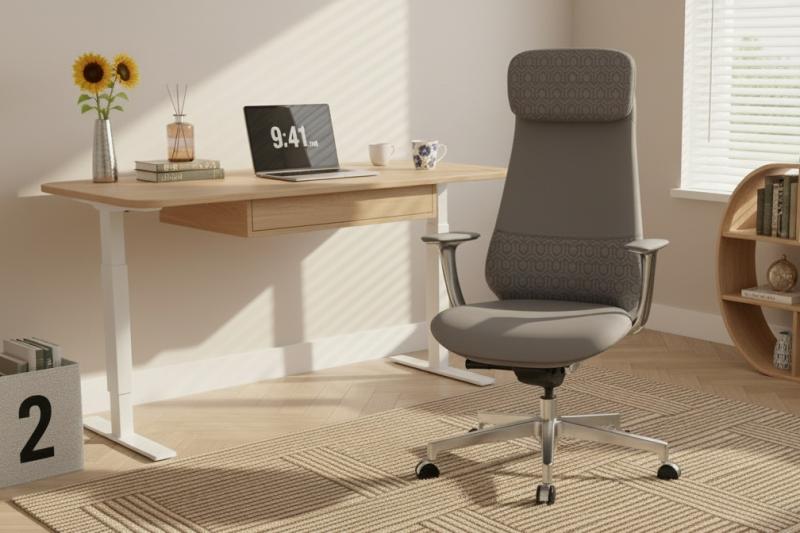
Does a Leather Office Chair Improve Work Confidence? Psychology of Seating Explained
Most people think a chair is just a tool for sitting. In reality, it plays a subtle but powerful role in how you think, behave, and even how confident you feel during work.
Whether you're leading meetings, answering emails, or working long hours at a desk, your seating environment sends signals to your brain. Among all office seating options, leather executive chairs are often associated with authority, professionalism, and control.
But does a leather chair actually improve work confidence—or is it just perception?
The answer lies in the psychology of seating.
The Psychology of Seating: How Environment Shapes Mindset
Environmental psychology suggests that our surroundings influence our behavior more than we realize. This includes lighting, desk layout, and especially seating.
A chair is not just furniture—it becomes part of your identity during work hours.
When you sit in a low-quality or uncomfortable chair, your brain often registers:
- Fatigue
- Discomfort
- Lack of focus
- Lower perceived status
On the other hand, a structured, well-designed chair—especially a leather executive chair—can signal:
- Authority
- Stability
- Professional identity
- Mental readiness
This is known as embodied cognition, where physical experience influences psychological state.

Why Leather Chairs Specifically Affect Confidence
Not all office chairs create the same psychological impact. Leather chairs stand out for several reasons:
1. Visual Authority and Executive Association
Leather chairs are historically associated with:
- Executives
- Boardrooms
- Decision-makers
- Leadership roles
When you sit in one, your brain subtly mirrors those associations. Even if you are working from home, your environment begins to feel more “executive-level,” which can elevate confidence.
2. Texture and Sensory Feedback
Leather provides a distinct sensory experience:
- Smooth surface
- Firm structure
- Slight temperature response to the body
This sensory consistency gives a feeling of control and stability, which helps reduce mental friction during work.
3. Posture Reinforcement
High-quality leather executive chairs (like those offered by Omidi Furniture) are usually designed with structured back support.
Better posture leads to:
- Improved breathing
- Increased alertness
- Reduced fatigue
- More confident body language
And posture doesn’t just affect how you feel—it affects how you think.
The Confidence Loop: How Seating Changes Behavior
There is a psychological cycle at play:
- You sit in a premium leather chair
- Your posture improves naturally
- Your breathing becomes more open
- You feel more alert and composed
- Your communication becomes clearer
- You perceive yourself as more capable
This creates what psychologists call a positive feedback loop, where behavior and mindset reinforce each other.
In contrast, a poorly designed chair creates the opposite loop—slouching, fatigue, and reduced self-perception.
Perception Matters: How Others See You in Virtual Work
In today’s remote and hybrid work environment, your chair is often visible during video calls.
A leather executive chair can subtly communicate:
- Professionalism
- Experience
- Attention to detail
- Leadership presence
Even if people don’t consciously analyze your chair, it contributes to your overall visual impression.
This is especially important in:
- Client meetings
- Team leadership calls
- Interviews
- Presentations
Your environment becomes part of your personal brand.
Comfort vs Confidence: Do You Need Both?
It’s important to clarify something: confidence doesn’t replace comfort—it builds on it.
A chair that looks premium but feels uncomfortable will eventually reduce confidence due to physical strain.
That’s why modern leather executive chairs combine:
- Ergonomic lumbar support
- Adjustable seating positions
- High-density cushioning
- Durable frame structure
This balance ensures that confidence is supported by long-term comfort, not just appearance.
The Role of Executive Leather Chairs in Modern Workspaces
Modern workspaces have evolved. People no longer just want functional furniture—they want psychological performance tools.
Executive leather chairs now serve three major roles:
1. Productivity Enhancement
Better posture = longer focus sessions without mental fatigue.
2. Status Signal
The chair reinforces a sense of professional identity.
3. Mental Transition Tool
Sitting down signals the brain: “It’s time to work seriously.”
This is especially useful for remote workers who struggle with separating home life from work mindset.
When a Leather Chair May NOT Improve Confidence
To stay realistic, leather chairs are not a universal solution.
They may not improve confidence if:
- The chair lacks ergonomic support
- It is too soft or poorly structured
- The user already experiences chronic discomfort unrelated to seating
- The workspace environment is highly cluttered or stressful
Confidence comes from a combination of environment, posture, and workflow—not furniture alone.
Choosing the Right Leather Executive Chair
When selecting a chair that improves both comfort and confidence, look for:
- Adjustable lumbar support
- Ergonomic backrest alignment
- High-quality leather material
- Stable armrest positioning
- Seat depth suited to your body type
Premium brands such as Omidi Furniture focus on combining executive aesthetics with ergonomic engineering, making them suitable for long-term office use.
Final Thoughts: Is Confidence Really in the Chair?
A leather chair does not magically create confidence. But it can strongly influence the conditions that allow confidence to grow.
It works through:
- Psychological association
- Physical posture improvement
- Environmental identity reinforcement
- Behavioral feedback loops
In short, your chair becomes part of how you see yourself at work.
If your workspace shapes your mindset, then upgrading to a well-designed leather executive chair is less about furniture—and more about upgrading your daily performance identity.