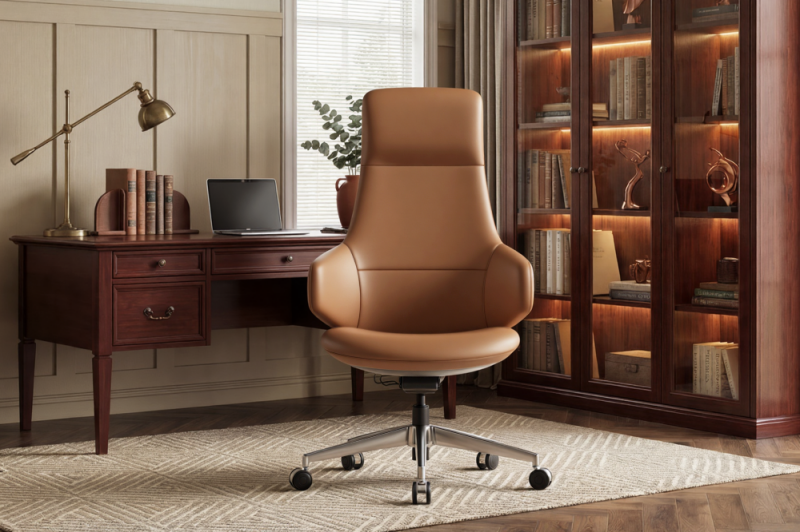
Can You Deduct an Office Chair on Your Taxes? A 2026 Guide for Home Office Setups
As tax season comes to an end, many professionals and remote workers start looking for last-minute ways to optimize their deductions. One question comes up more often than you might expect:
Can you deduct an office chair on your taxes?
The short answer is: yes, in many cases—but it depends on your work situation and how you use the chair.
In this guide, we’ll break down everything you need to know about office chair tax deductions, home office expenses, and IRS rules, while also helping you think about your workspace as a smart long-term investment.
Who Can Deduct an Office Chair?
Before anything else, eligibility is key.
Self-Employed and Business Owners
If you’re a freelancer, contractor, or small business owner, you can typically deduct office furniture—including your office chair—as a business expense.
This applies if:
- You run your own business
- You earn income outside of a traditional employer
- You regularly work from a home office
In these cases, your office chair is considered a necessary and ordinary expense for running your business.
Remote Employees (W-2)
If you’re a full-time employee working remotely for a company, the rules are different.
Due to changes introduced by the Tax Cuts and Jobs Act, most employees cannot deduct unreimbursed work expenses, including office furniture.
That means:
- If your employer does not reimburse you → you likely cannot deduct it
- If you’re paid via W-2 → deductions are generally not allowed

What Qualifies as a Deductible Office Chair?
Not every purchase automatically qualifies. The IRS has clear expectations.
1. Ordinary and Necessary
Your office chair must be:
- Commonly used in your type of work
- Helpful and appropriate for your business
A quality office chair—especially for long hours of work—typically meets this standard.
2. Used for Business Purposes
Usage matters.
- 100% business use → fully deductible
- Mixed use (home + personal) → partially deductible
For example, if your chair is used 70% for work, you may deduct 70% of the cost.
3. Part of a Qualified Home Office
If you’re claiming the Home Office Deduction, your workspace must:
- Be used regularly and exclusively for business
- Have a clearly defined work area
This strengthens your ability to deduct furniture like desks and chairs.

How to Deduct an Office Chair
There are two main ways to handle deductions:
1. Direct Expense Deduction
Most small purchases—including office chairs—are deducted as business expenses in the year you buy them.
This is the simplest and most common approach.
2. Section 179 Deduction
For higher-value items or full office setups, you may use the Section 179 deduction.
This allows you to:
- Deduct the full purchase price upfront
- Instead of spreading the cost over several years
This is particularly useful if you're upgrading multiple elements of your workspace at once.
Why Your Office Chair Is More Than Just an Expense
When thinking about tax deductions, it’s easy to focus purely on savings.
But your office chair is more than a line item—it’s something that directly affects your comfort, posture, and productivity.
Long Hours, Real Impact
If you spend 6–10 hours a day at your desk, your chair influences:
- Focus and concentration
- Physical comfort
- Long-term health
A poorly designed chair can lead to fatigue, while a well-designed one supports better performance throughout the day.
A Smarter Way to Invest in Your Workspace
Tax season is often about looking back—but it can also be a chance to look forward.
Instead of viewing an office chair as a cost, many professionals now see it as:
- A workspace upgrade
- A productivity tool
- A long-term investment
And when it may also qualify as a business expense, the decision becomes even more practical.

Leather Office Chairs: Are They Worth It?
One common question is whether a leather executive office chair is a justifiable purchase.
From a tax perspective, material doesn’t matter—what matters is business use.
But from a workspace perspective, the difference is noticeable.
Durability and Longevity
A high-quality leather office chair:
- Ages well over time
- Maintains its structure and support
- Often lasts longer than fabric alternatives
Professional Aesthetic
For many professionals, especially those meeting clients virtually or in person, appearance matters.
A refined workspace can:
- Create a stronger impression
- Reflect professionalism and attention to detail
Comfort That Supports Long Work Sessions
Executive-style chairs are often designed with:
- Wider sitting areas
- Structured back support
- Premium cushioning
These features contribute to a more stable and comfortable working experience.
Common Mistakes to Avoid
When claiming office furniture on your taxes, there are a few pitfalls to watch out for:
❌ Assuming Everyone Qualifies
Not all workers are eligible—especially W-2 employees
❌ Mixing Personal and Business Use Without Tracking
If you use the chair for both, keep a reasonable estimate of usage
❌ Not Keeping Records
Always keep:
- Receipts
- Purchase dates
- Proof of business use
Tips for Making the Most of Your Home Office Deduction
To stay on the safe side and maximize your deductions:
- Define a dedicated workspace
- Track all office-related purchases
- Keep digital copies of receipts
- Use accounting tools or consult a tax professional
Final Thoughts
So, can you deduct an office chair on your taxes?
Yes—if you’re self-employed, use it for business, and meet IRS requirements.
But beyond the tax benefit, your office chair plays a bigger role in how you work every day.
As more people continue working from home or running independent businesses, the line between expense and investment becomes clearer.
A well-designed workspace isn’t just about efficiency—it’s about creating an environment that supports how you think, work, and perform.
And sometimes, the simplest upgrade—like the chair you sit in every day—can make the biggest difference.