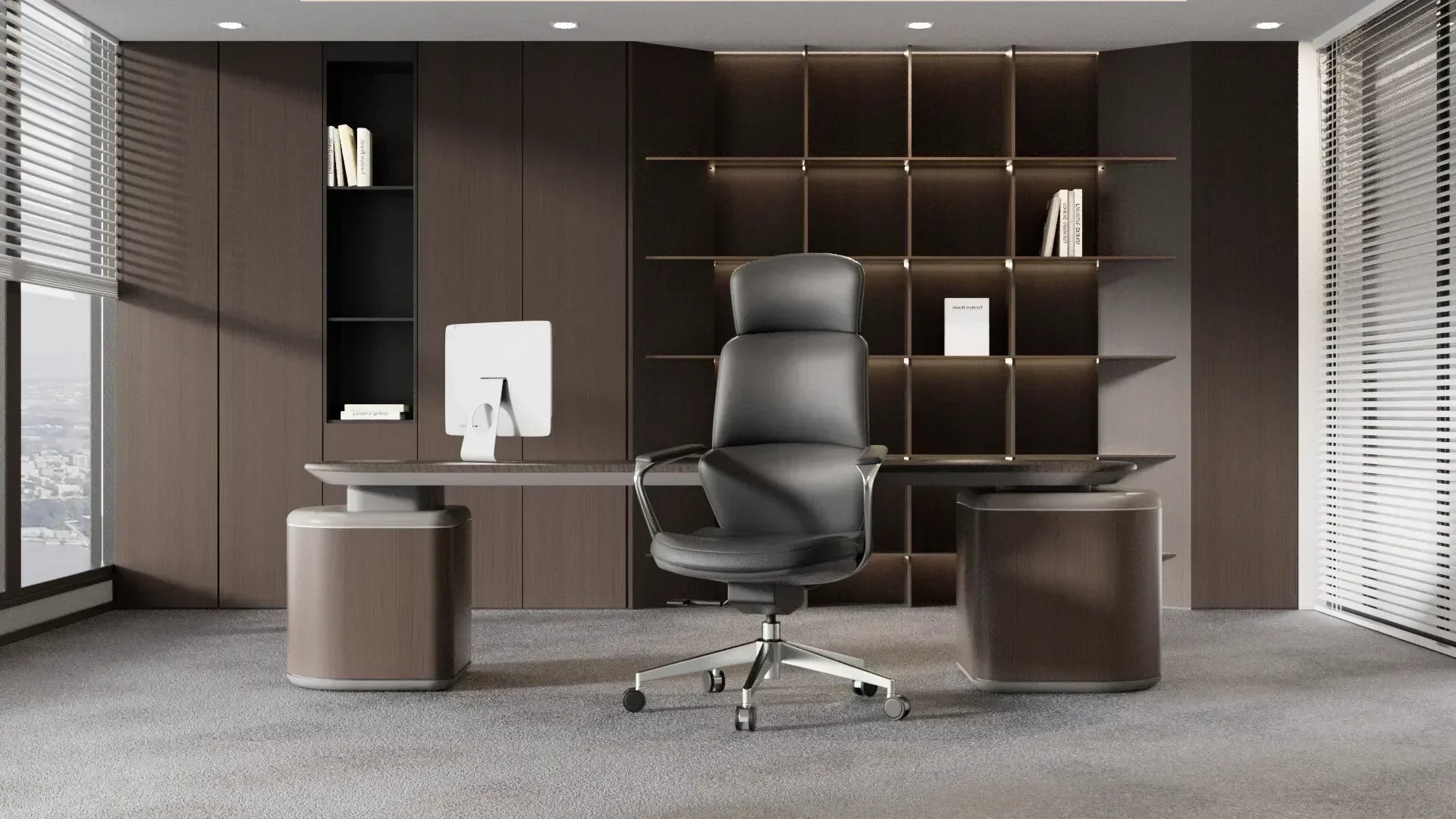
How to Choose the Best Executive Leather Office Chair for Your Workspace
When you’re investing in a quality leather office chair for your workspace — whether home office, corporate suite or remote setup — the choice goes beyond looks. A well‑designed executive leather chair should support your posture, comfort, and productivity, while matching your style and lasting for years.
In this guide, I’ll walk you through everything you should consider: material, build quality, ergonomics, comfort, colour, and how to match a chair to your needs. By the end, you should have a clear idea of what makes a top‑notch genuine leather office chair, or when a PU/faux‑leather alternative might work — and how to pick a black leather chair or brown leather office chair that fits your space.

1. Start with the Right Material — Genuine Leather vs Faux Leather
The material of the chair is the foundation of both comfort and longevity. When assessing a leather chair, first check what kind of leather (or leather‑like material) it uses.
-
Genuine / Top‑Grain / Full‑Grain Leather: If budget allows, these types offer the best longevity, comfort and aging characteristics. The surface shows subtle natural marks or grain — which is a sign of authenticity. Over time, such leather softens and develops a graceful patina, enhancing comfort and aesthetics.
-
PU Leather / Faux Leather / Leatherette: These chairs often cost less, look similar to real leather, and are easier to maintain. For workers who want the “leather chair” look but have a tight budget or need minimal upkeep, a good PU leather chair may be acceptable — especially if usage is moderate.
-
Avoid Bonded Leather/Very Low-end Materials: Bonded leather is made from scraps + adhesive and tends to peel or crack after a short period. For a long-term investment, it’s best to avoid chairs described vaguely as “genuine leather” unless the seller clarifies the grade.
✅ Quick tip
If you spend 6–10 hours daily at your desk, or you want the chair to last years, choose genuine or top‑grain leather. If you expect lighter use and prefer affordability/low maintenance, a high‑quality PU leather chair is acceptable.

2. Inspect Build Quality — Frame, Base, Stitching, and Padding
A great leather chair needs a strong foundation. Even the best leather upholstery can’t compensate for a flimsy frame or poor padding.
-
Frame & Base — Look for chairs with a metal or reinforced aluminum/steel frame and a stable five‑point base with quality casters. Chairs with plastic frames are often less stable and more prone to wobbling or breaking over time.
-
Padding & Cushioning — High‑density foam or memory foam padding keeps the seat supportive and comfortable for long hours. Quality foam maintains its shape rather than flattening quickly.
-
Stitching & Upholstery Finish — Check seams for tight, even stitching (double stitching is a plus). Edges should be neatly sealed or folded, not simply glued. Uniform, “plastic‑looking” surfaces often indicate faux leather or cheap construction.
-
Weight Capacity & Stability — Good executive chairs typically support at least 250‑300 lbs. A robust construction helps ensure long-term stability and safety.

3. Prioritize Ergonomics — Adjustability, Support, Seat Depth & Tilt
A beautiful leather chair is nice — but for daily use, ergonomics matter more. Poor seating posture can cause back pain, stiffness, and fatigue, especially for people sitting 8+ hours a day.
Here’s what to look for:
-
Lumbar Support — A built-in or adjustable lumbar support helps maintain the natural curve of your spine, reducing lower‑back strain.
-
Adjustable Height & Seat Depth — Your feet should rest flat on the floor with thighs roughly parallel to it. Some chairs also offer adjustable seat depth, which is useful if you’re tall or short.
-
Recline & Tilt Mechanism — Chairs with a multi-tilt or synchronous tilt mechanism let you change positions during the day, promoting better circulation and comfort. A lockable tilt and smooth recline can significantly improve posture over time.
-
Armrests (3D or 4D) — Adjustable armrests that move up/down, forward/backward, or pivot help you maintain ergonomic posture if you type or use a mouse often.
-
Backrest & Headrest — A high-back design with a headrest supports shoulders and neck — very useful if you spend many hours on calls, reading, or deep work sessions.

4. Choose the Right Colour and Finish — Black Leather Chair vs Brown Leather Office Chair (or other colours)
Colour and finish matter, especially if you care about aesthetics and how the chair fits your workspace.
-
Black Leather Chair — A classic choice. Black exudes professionalism, authority, and pairs well with most office interiors: minimalist, wood-toned desks, glass tables, or modern metal furniture. It hides minor stains and scuffs better than lighter colours.
-
Brown Leather Office Chair — Offers a warmer, more traditional or vintage vibe. Brown can pair beautifully with wooden desks, warm lighting, or home-office décor. Over time, brown leather often develops a rich patina that adds character.
-
Other Colours / Custom Finishes — While black and brown are the most common, some chairs come in darker navy, dark grey, or earth tones. This can help match unique office interiors or personal style — but be extra sure of the material quality if you go for non-traditional colours.
✅ Colour selection tip
If you want a safe, versatile choice for a corporate or client-facing workspace: go with a black leather chair.
If you prefer a warm, homely, classic look — especially for a home office — a brown leather office chair might be more inviting.

5. Consider Your Work Habits & Environment — Usage, Climate, and Maintenance
Your choice should reflect how you work and where you’re working.
-
Duration of Sitting — If you’re at your desk for 6–10 hours daily, prioritise ergonomic support, high-density padding, and adjustable settings. If your use is occasional or part-time, a simpler leather chair might suffice.
-
Climate & Comfort — In warm or humid climates (like Singapore), genuine leather can sometimes feel hot or sticky if not properly ventilated. Many modern leather chairs (or PU‑based ones) are designed with breathability or perforation in mind — a detail worth checking.
-
Maintenance Commitment — Real leather benefits from regular care. Wipe with a damp cloth periodically, and apply a good leather conditioner every 6–12 months to prevent drying or cracking. Avoid leaving the chair under direct sunlight or near heat vents, which can damage leather over time.
6. Evaluate Cost vs Value — Investing Smartly
A good leather office chair tends to cost more than fabric or mesh alternatives — but value isn’t only about price. It’s about longevity, comfort, and long-term benefits.
-
Durability & Lifespan — High-quality genuine leather chairs can last well over a decade when maintained properly, significantly longer than cheaper alternatives.
-
Cost per Use — Because of durability and comfort, the effective “cost per year or per hour used” of a quality chair often ends up lower than replacing cheaper chairs every few years.
-
Health & Productivity Gains — Better posture, fewer breaks due to discomfort, and reduced risk of back pain or musculoskeletal issues can contribute to long‑term wellbeing and performance.
If you value comfort, health, and a professional workspace — consider a genuine leather office chair as a long‑term investment, not just furniture.
-
Office or Home Setting — For client-facing offices, a black leather chair in sleek design conveys authority. For cozy home spaces, a brown leather office chair can add warmth. Also consider ergonomics and adjustability if others will use the chair (shared desks, co-working spaces, etc.).
7. Test Before You Buy (If Possible) — Fit Matters
Even with the best specs, fit and personal comfort matter more than anything. If you can try the chair physically before buying, do so.
When you test it:
-
Check seat height, depth, and how your feet rest on the floor.
-
Try the lumbar support — does it feel natural?
-
Adjust the tilt and recline (if available) — see whether transitions are smooth and fluid.
-
Sit for 10–15 minutes — even that short time can reveal pressure points or discomfort that may show up more after hours of use.
If you’re buying online, try to choose a retailer with good return policy or detailed specifications — especially for seat depth, cushion thickness, adjustment ranges, and weight capacity.

8. Key Features Checklist
Before purchasing any leather office chair, make sure it satisfies the following checklist:
| Feature | Why It Matters |
|---|---|
| Genuine or top‑grain leather (or quality PU if budget demands) | Longevity, comfort, authentic look |
| Strong metal/aluminum frame + stable base & wheels | Stability and safety over time |
| High‑density or memory foam seat and back padding | Comfort for long hours, lasting cushioning |
| Adjustable lumbar support, armrests, seat height, tilt/recline | Ergonomic posture and versatility |
| Seat depth and width suitable to your body size | Proper fit and comfort |
| High-back + headrest (optional) | Neck, shoulder support especially for long workdays |
| Clean stitching and upholstery finish | Durability; avoid peeling or tearing |
| Colour that matches your workspace (black or brown or other) | Aesthetic harmony and professional look |
| Maintenance plan (cleaning + conditioning) | Preserve leather quality, extend lifespan |
9. Choosing Between Black Leather Chair, Brown Leather Office Chair (or Other Styles)
When narrowing down the colour/style, consider the following:
-
Black Leather Chair — Best for corporate offices, formal settings, home offices with modern/neutral décor, or shared workspaces. It’s versatile, hides wear and stains well, and pairs with most furniture.
-
Brown Leather Office Chair — Great for warm, classic, or home‑office vibes. Works well with wooden furniture or vintage décor. Over time, the leather may develop a richer patina, adding character.
-
Other Colours / Custom Finishes — If your office has unique color tones or interior design (dark wood, navy, grey, etc.), consider matching the chair accordingly. But prioritise build & material quality over colour novelty.
Select a colour that aligns with your workspace’s identity — but don’t sacrifice build quality, comfort, or ergonomics just for a particular shade.

10. Final Verdict: What Makes the Best Executive Leather Office Chair
After all the factors above, the "best" chair often meets these criteria:
-
Uses genuine leather or high‑quality top‑grain leather (or very good faux‑leather if budgeted), with visible natural texture.
-
Has robust frame, stable base, smooth casters, and is built to support regular daily use.
-
Provides ergonomic adjustability — lumbar support, tilt, seat depth/height, armrests, and ideally a high-backrest with head support.
-
Uses high-density cushioning that stays comfortable for hours.
-
Comes in a colour and style (black, brown, classic or modern) that fits your workspace aesthetic.
-
Offers good maintenance instructions and if possible, a warranty or after-sales support.
A properly chosen leather office chair isn’t just a piece of furniture — it’s an investment in comfort, posture, productivity, and workspace identity.
Conclusion
Choosing the right executive leather chair takes thought and attention to detail. It’s not only about appearance — material, build quality, ergonomics, maintenance, and how well the chair matches your working style and environment all matter.
Whether you pick a sleek black leather chair for a corporate office or a warm brown leather office chair for a home study, the right choice improves posture, comfort, and workspace ambience. For those committed to long hours at a desk, investing in a genuine leather office chair is more than a style statement — it’s a long-term commitment to health and productivity.
Remember: always test or carefully check specs before buying. A chair that suits you properly can make all the difference in your work experience.